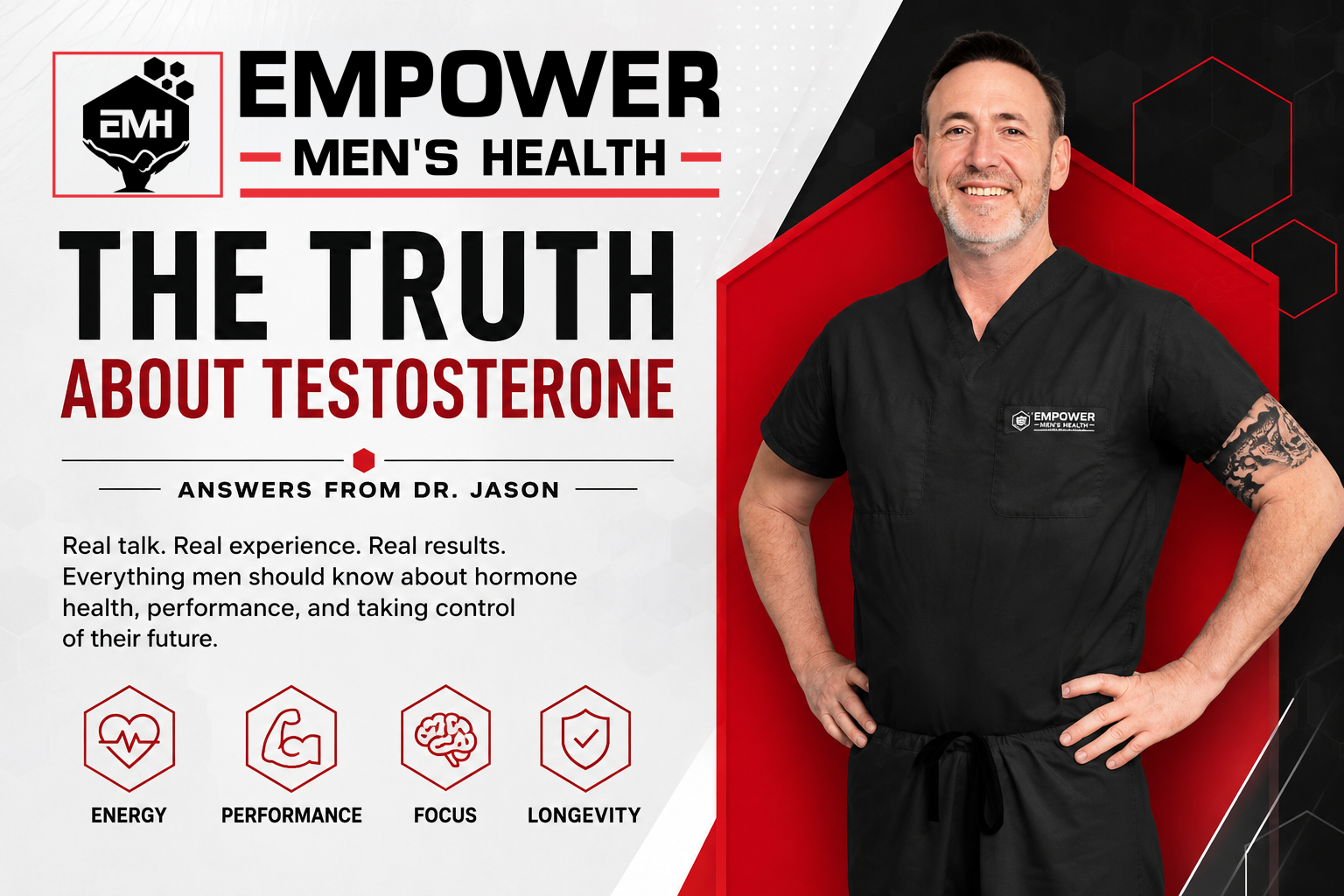
The Silent Problem Affecting High-Performing Men
Low testosterone symptoms are more common than most men realize—and they often go ignored until performance starts to drop.
If you’ve been feeling off, low testosterone could be the reason.
This guide breaks down exactly how to know if you have low testosterone, what signs to watch for, and when to take action.
What Is Low Testosterone?
Testosterone is the hormone that drives:
- Energy
- Muscle growth
- Mental clarity
- Libido
- Confidence
- Fat metabolism
When levels drop, everything slows down.
Clinically, low testosterone (Low T) is typically diagnosed when levels fall below ~300 ng/dL, but symptoms often show up long before that.
Top Signs You Might Have Low Testosterone
1. Low Testosterone Symptom: Constant Fatigue
You wake up tired…
Midday crashes hit hard.
Coffee barely moves the needle.
This isn’t normal – it’s hormonal.
2. Loss of Drive and Motivation
You’re not as sharp.
You procrastinate more.
The fire you used to have? It’s fading.
This is one of the earliest red flags.
3. Decreased Sex Drive
A drop in libido is one of the most common, and ignored symptoms.
If your interest in sex has noticeably declined, your testosterone likely has too.
4. Erectile Issues
Struggling with performance or consistency?
Testosterone plays a direct role in sexual function – not just desire.
5. Increased Body Fat (Especially Belly Fat)
That stubborn midsection?
It’s not just diet.
Low testosterone shifts your body into fat-storage mode.
6. Loss of Muscle Mass
Even if you’re working out:
- You’re not gaining strength
- You’re losing size
- Recovery is slower
That’s a hormonal issue, not a discipline issue.
7. Brain Fog and Poor Focus
You feel:
- Mentally slower
- Less sharp in conversations
- Easily distracted
This hits high performers the hardest.
8. Mood Changes or Irritability
Low testosterone is strongly linked to:
- Depression
- Anxiety
- Irritability
- Low confidence
You’re not “off”… your hormones are.
9. Poor Sleep Quality
Low testosterone disrupts sleep cycles – especially deep sleep.
Which creates a vicious cycle:
Low T → Poor Sleep → Even Lower T
What Causes Low Testosterone?
It’s not just age.
Modern life is working against you:
- Chronic stress (cortisol overload)
- Poor sleep
- Processed foods
- Alcohol
- Lack of strength training
- Environmental toxins
Even high-performing men are burning out hormonally.
What Are the Most Common Low Testosterone Symptoms in Men?How to Know for Sure (Testing Matters)
Symptoms are the warning signs, but testing is the truth.
At Empower Men’s Health, this goes beyond a basic lab.
We look at:
- Total Testosterone
- Free Testosterone
- SHBG
- Estradiol
- Cortisol
- Metabolic markers
Because guessing doesn’t fix anything.
Precision does.
What Happens If You Ignore Low Testosterone?
This is where most men lose years of their life.
Unchecked Low T can lead to:
- Weight gain
- Muscle loss
- Burnout
- Relationship strain
- Reduced performance at work
- Increased risk of chronic disease
It’s not just about feeling better.
It’s about protecting your future.
What You Can Do About It
The right approach is not a quick fix.
At Empower Men’s Health, the focus is total optimization:
- Hormone optimization (TRT when appropriate)
- Metabolic testing
- Nutrition strategy
- Strength & recovery optimization
- Stress regulation
This is about rebuilding your system, not masking symptoms.
Final Word: Don’t Guess—Know
If you’re even questioning it, there’s a reason.
High-performing men don’t ignore data.
They use it to dominate.
Your energy, your edge, your performance, it all starts here.
Reviewed by Dr. Jason Chiriano, D.O., FACS
Founder and lead physician of VivaLife Healing & Weight Loss Centers and Empower Men’s Health, Dr. Chiriano specializes in regenerative and functional medicine, men’s health, testosterone replacement therapy (TRT), metabolic optimization, joint health, and longevity-focused care.
Book your consultation here.